
One Room Always Hotter Than the Rest? Why a Mini-Split Solves It
Quick Answer: A single room runs hotter than the rest of the house because the ducted system serving it loses cooling capacity over distance, competes with sun exposure the thermostat never sees, or was never sized to reach that space in the first place. A single-zone ductless mini-split fixes this by delivering dedicated, independently controlled capacity straight to that one room, bypassing the duct run entirely instead of trying to force more air through it.
The Room That Never Cools Down
You've felt it. The thermostat in the hallway reads a comfortable number, the rest of the house feels fine, and then you walk into that one room — the guest bedroom over the garage, the office that used to be a porch, the upstairs bedroom at the end of the hall — and the air feels five to ten degrees warmer. You've closed the vent in every other room trying to force more air down that one line. You've swapped out the air filter. You've had someone check the refrigerant charge. None of it moves the needle, because the problem was never the equipment. It's the path the air has to travel to get to that room, and out here in the high desert, that path fights you harder than it does almost anywhere else.
Central air and forced-air furnaces work on a simple assumption: one blower, one set of ducts, one thermostat reading for the whole house. That assumption holds up fine in a home where every room sits roughly the same distance from the air handler, faces a similar direction, and was built at the same time as everything else. Most homes don't meet that description. Additions get bolted onto the end of an existing duct run. Sunrooms get finished with a single flex line stretched across an attic. Two-story homes stack heat upward. And in Rio Rancho, Albuquerque, and the rest of the high desert corridor, intense solar load and huge day-to-night temperature swings push those weak points past what the system can compensate for.
Tip: Before you assume it's a zoning or duct problem, check that the supply vent in the hot room is fully open and not blocked by furniture, curtains, or a rug. It sounds basic, but a partially closed damper or a couch pushed against a floor register accounts for more "phantom hot rooms" than people expect.
Why Ductwork Runs Out of Cooling Capacity Before It Reaches That Room
Every duct run loses some of what it carries between the air handler and the register. Air sheds temperature as it travels, and it sheds more when the run is long, passes through an unconditioned attic, or slows through sharp bends and undersized sections.
In a high-desert attic, that loss compounds fast. Summer attic temperatures climb past what duct insulation can keep pace with, so air reaching a far register has already warmed several degrees. Add a west-facing window or a spot over the garage, and it's losing before the air arrives.
This is a design limitation, not a maintenance failure. You can replace filters, service the coil, and keep refrigerant exactly where it belongs, and the room at the end of a long, leaky run still runs warmer, because the system was never built to reach it equally.
Additions, Conversions, and Rooms Ducts Were Never Built to Reach
A huge share of single-hot-room calls trace back to a room that wasn't part of the original duct design. A converted garage, a bumped-out sunroom, a finished attic, a home office carved out of an old patio. These rooms usually get cooling tapped off the nearest trunk line after the fact.
That works on paper because it gets some air into the room, but it never delivers the airflow volume the original system was sized for. The blower and compressor were matched to the home's original square footage. Add a room later, and the same fixed capacity now has to cover more ground.
Converted spaces also inherit different construction: a garage conversion often has less wall insulation and a slab floor, while a sunroom carries more glass per square foot than any other room. In Rio Rancho and Albuquerque, where the sun is intense and dry-air radiant gain outweighs humidity, that combination makes such rooms the hottest by default.
Two-Story Heat Stacking and the High-Desert Temperature Swing
If your hot room happens to be upstairs, there's a second mechanism working against you on top of duct losses. Warm air rises and pools at the top of a two-story home, a physical process sometimes called the stack effect. Even with a perfectly balanced duct system, upstairs rooms tend to run warmer in summer and colder in winter than rooms on the ground floor, because the thermostat controlling the whole system is almost always mounted downstairs, reading a temperature that doesn't reflect what's happening at the top of the stairs.
High-desert conditions make the swing more noticeable. Daytime highs in Albuquerque, Rio Rancho, Bernalillo, Corrales, Placitas, and the surrounding valley communities routinely push well into the 90s through summer, with intense, direct sun and very little cloud cover to soften it. Upstairs rooms with west- or south-facing windows absorb that solar load through the afternoon and into the evening, then release it slowly after sunset, which is part of why an upstairs bedroom can still feel warm well after the outdoor temperature has dropped for the night. A single downstairs thermostat has no way to detect any of that. It's satisfied long before the upstairs room actually is.
Why a Single-Zone Mini-Split Solves This Specific Problem
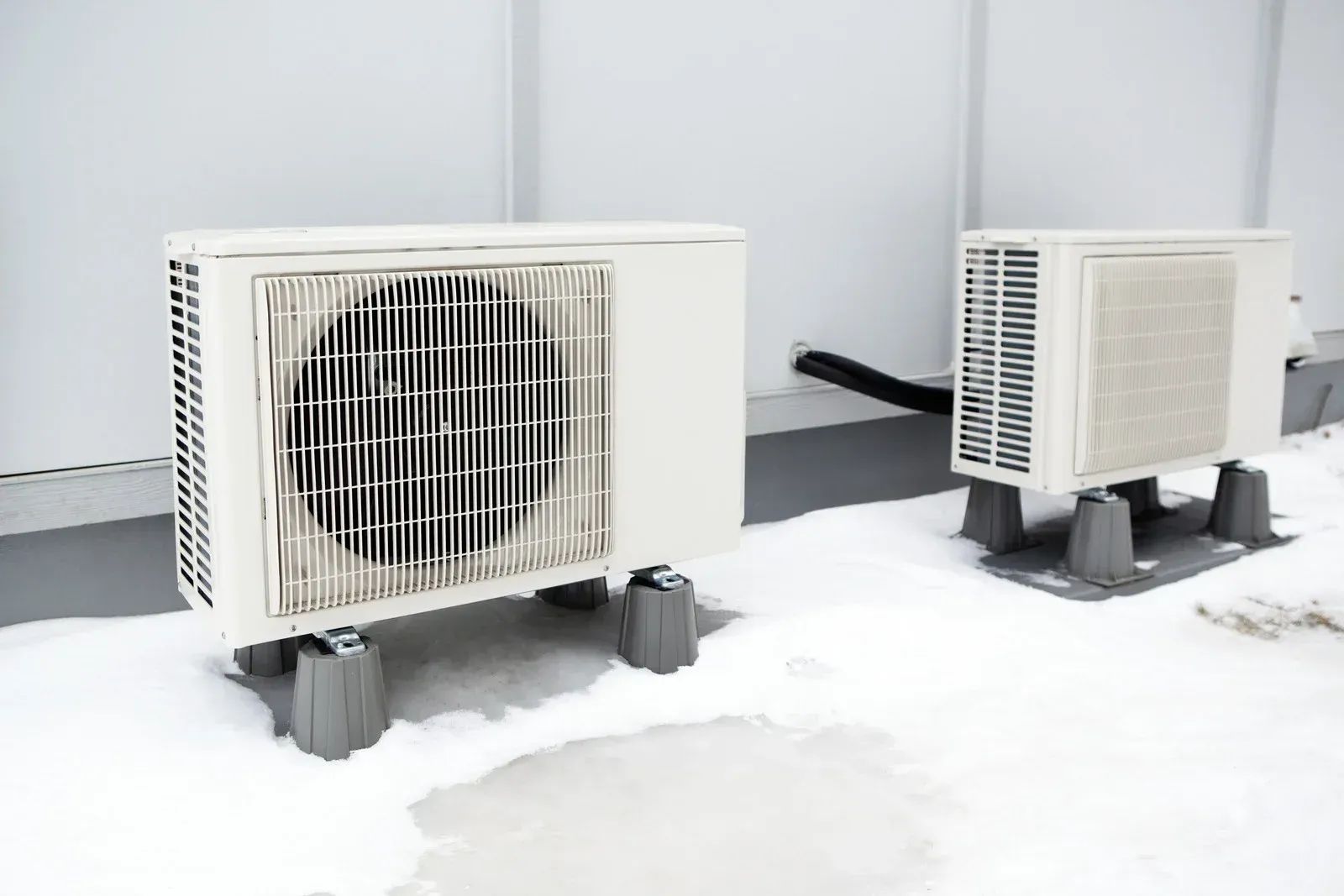
A single-zone ductless mini-split doesn't try to fix the duct system. It sidesteps it. Instead of routing more conditioned air through the same duct run that's already losing capacity over distance, a mini-split places an indoor unit directly in the room that's struggling, connected to an outdoor condenser by a small refrigerant line run through an exterior wall. The room gets dedicated capacity, sized specifically for its square footage, its window exposure, and its insulation, not a leftover share of whatever the main system has left after conditioning the rest of the house.
Because the indoor unit has its own thermostat, the room is no longer at the mercy of a reading taken somewhere else in the house. If the guest room over the garage needs to run several degrees cooler than the hallway to feel comfortable, it can, without overcooling every other room to compensate. Most mini-split systems also use inverter-driven compressors, which modulate output up and down rather than cycling fully on and off. That matters in a room with heavy solar gain, because the unit can ramp up during the hottest part of the afternoon and taper back once the sun moves off that wall, tracking the room's actual heat load through the day instead of overshooting and undershooting the way a single-stage system does.
For additions and conversions specifically, this sidesteps the sizing problem entirely. You're not asking an existing air handler that was matched to the original house to also cover new square footage it was never sized for. The mini-split is sized to the addition alone, with capacity chosen for that room's specific exposure and construction, and it never had a "before" state to fall short of.
Warning: Don't size a mini-split by guessing based on square footage alone. A west-facing sunroom with floor-to-ceiling glass needs meaningfully more capacity than a similarly sized interior bedroom with a single small window, and an undersized unit in a high-solar-gain room will run constantly without ever quite catching up on the hottest afternoons.
What to Expect and How This Compares to Other Fixes
Homeowners dealing with a chronic hot room usually try a few things before landing on a mini-split, and it's worth understanding why the common fixes tend to fall short.
Closing vents in other rooms to push more air toward the problem room rarely works the way people expect. Most residential duct systems aren't designed to handle that kind of pressure change, and closing registers elsewhere can actually reduce total airflow and strain the blower rather than redirecting meaningful volume to the room that needs it.
Adding a booster fan inside the duct can help on marginal cases where the issue is mild restriction, but it doesn't address heat gain along the duct run itself, and it does nothing for a room that's simply outside the capacity the original system was designed to deliver.
Re-ducting the affected room, running a new, larger, better-insulated line directly from the air handler, can work, but it means opening up walls or attic space to run new ductwork, and it's still limited by whatever spare capacity the existing blower and compressor have left to give. If the rest of the house is already using most of what the system can produce, a bigger duct run to one room doesn't create more cooling out of nothing.
A single-zone mini-split sidesteps all of that. It adds capacity rather than redistributing capacity that's already spoken for, it doesn't require modifying the existing duct system at all, and the installation footprint is limited to the room itself: an indoor unit on an interior wall, a small line set run to an outdoor condenser, and a thermostat that finally reflects what that specific room actually needs.
Frequently Asked Questions
Will a mini-split in one room affect how my central air works in the rest of the house?
No. A single-zone mini-split runs independently of your central system. It doesn't tie into your ductwork, air handler, or main thermostat, so cooling one room has no effect on airflow or performance elsewhere in the house.
How do I know if my hot room is a duct problem or a mini-split problem?
If the room has always run warm regardless of season or upkeep, and it sits at the end of a long, sun-exposed duct run, that points to a capacity limit a technician can confirm.
Can a mini-split handle both heating and cooling for a single hot room?
Yes. These single-zone systems are heat pumps by design, so the same unit cools the room in summer and heats it in winter. That's useful in a climate with the wide seasonal swings this region sees.
Does the room need to be sealed off or isolated for a mini-split to work well?
Not sealed off, but insulation and window quality affect how hard the unit works. A room with drafty windows still runs less efficiently, so sealing obvious air leaks before installation gets the most from the system.
When One Room Finally Matches the Whole House
A room that never cools down is rarely a broken system. More often it sits too far down the duct run, faces too much afternoon sun, or was added long after the original layout was set. Enchanted Hills Mechanical has spent 15 years working with homes across Rio Rancho, NM, where the high-desert heat exposes those weak points quickly, and a single-zone mini-split answers them directly by adding capacity right in the spot the house was always short.
The difference shows up in the details a whole-house system can't reach: a thermostat that reads the room you're actually in, output that ramps with the afternoon instead of overshooting it, and a space that no longer waits on the rest of the house to get its share. That converted garage, upstairs bedroom, or bumped-out sunroom stops being the one room you avoid all summer and starts feeling like part of the home again.