
AC Running but the House Won't Cool in the Albuquerque Heat? What's Holding It Back
Quick Answer: When an air conditioner runs all day and the house still will not cool, the cause is almost always one of four things. Airflow is restricted by a dirty filter, closed vents, or a clogged indoor coil. Heat cannot leave the system because the outdoor coil is caked with dust or cottonwood fluff. The thermostat or fan setting is working against you. Or the system has lost refrigerant or developed a failing part. Check the thermostat, filter, vents, and outdoor unit first. If the air from the vents is only slightly cooler than the room, shut the system off and call a technician.
It is four in the afternoon in Rio Rancho in July. The thermostat is set to 76, the outdoor unit has been humming since breakfast, and the living room is sitting at 82. You can hear the system running. You can feel air coming out of the vents. The house just never gets there, and every hour it runs, you wonder whether something is about to fail.
That situation is frustrating because nothing looks broken. The system is not off, and it is not blowing hot air. It is simply not keeping up. In the Albuquerque metro, where afternoon highs often sit in the upper 90s and the sun bakes roofs and west facing walls for hours, a system that is even a little off its game shows it quickly.
This guide walks through the reasons a running air conditioner fails to cool, in the order a technician would think about them. Some are checks you can do safely in minutes. Others need gauges, meters, and training, and we will point out where that line sits.
First Decide What Kind of Not Cooling You Have
Before you touch anything, spend a minute noticing the pattern. The pattern narrows down the cause faster than any single test.
If the air from the vents feels warm or room temperature, the cooling part of the system is not working at all. That points toward the outdoor unit, the refrigerant circuit, or a control problem. If the air feels cool but weak, the system is making cold air but cannot move enough of it. That points toward airflow. If the air feels cold at the vents but the house still climbs in temperature, the system may be undersized for the conditions, losing cooling through leaky ducts, or fighting a heat load that has grown since it was installed.
Also notice timing. A system that keeps pace in the morning and falls behind only in the late afternoon is behaving differently from one that has never kept up this summer. The first is often a capacity or airflow limit that shows up only under the hardest load. The second suggests something has changed or failed.
Start at the Thermostat and the Fan Setting
It sounds too simple to matter, but thermostat settings account for a surprising share of service visits. Confirm the mode is set to COOL, not AUTO changeover or HEAT, and that the set temperature is several degrees below the room temperature. Check that the display is not dim or blank, since weak batteries can make a thermostat send unreliable signals.
Then look at the fan setting. With the fan on AUTO, the blower runs only while the system is cooling. With the fan on ON, it runs constantly. During the long pauses between cooling cycles, that constant fan can push warm, humid feeling air from hot ducts into the house, and it can pick moisture off the coil and blow it back into the rooms. If the vents feel lukewarm between cycles, switch the fan to AUTO and check again during a full cooling cycle.
Smart thermostats deserve a second look. Many have schedules, away modes, or learning features that quietly raise the setpoint during the day. If your thermostat says 76 but the schedule changed the target to 80 an hour ago, the system is doing exactly what it was told.
Tip: Set the thermostat to a temperature a few degrees below the current room temperature and leave it alone for fifteen minutes. If the system never shuts off and the air from the vents does not feel cold, you have ruled out a control issue and can move on to airflow and the outdoor unit.
A Dirty Filter Starves the Whole System
Your air conditioner cools by pulling warm house air across a cold indoor coil. If the filter is clogged, not enough air reaches that coil. Cooling drops, the coil can get so cold that it freezes, and the blower strains against the restriction.
Fine dust is a fact of life around Albuquerque, Corrales, Bernalillo, and Placitas. A windy spring, nearby construction, unpaved roads, and pets can load a filter much faster than the calendar says. Pull the filter and hold it up to a light. If you cannot see light through it, replace it. Make sure the arrow on the frame points toward the blower and that the filter door is closed tightly so air is not pulled around the edges.
While you are there, check that the filter size matches the slot. A filter that is too small, or one that is much thicker and denser than the system was designed for, can restrict airflow just as much as a dirty one.
Closed Vents, Blocked Returns, and Rooms That Never Catch Up
A forced air system is balanced around moving a certain amount of air. Closing vents in unused rooms does not save cooling. It raises the pressure inside the ducts, can increase leakage at the seams, and reduces the air crossing the coil. Walk the house and open every supply vent, then confirm the return grilles are not blocked by furniture, rugs, or stacked boxes.
If one part of the house, such as an upstairs bedroom or a sun facing room, is always warmer than the rest, the system may be fine and the distribution may be the issue. Ducts running through a hot attic lose cooling on the way to the room, and a disconnected or crushed section can dump cold air into the attic instead of the living space. That kind of problem often feels like a weak system when the equipment is actually doing its job.
The Outdoor Unit Has to Get Rid of the Heat
An air conditioner does not make cold. It moves heat from inside the house to the outdoors. The outdoor coil is where that heat is released, and it can only do that if air flows freely through it.
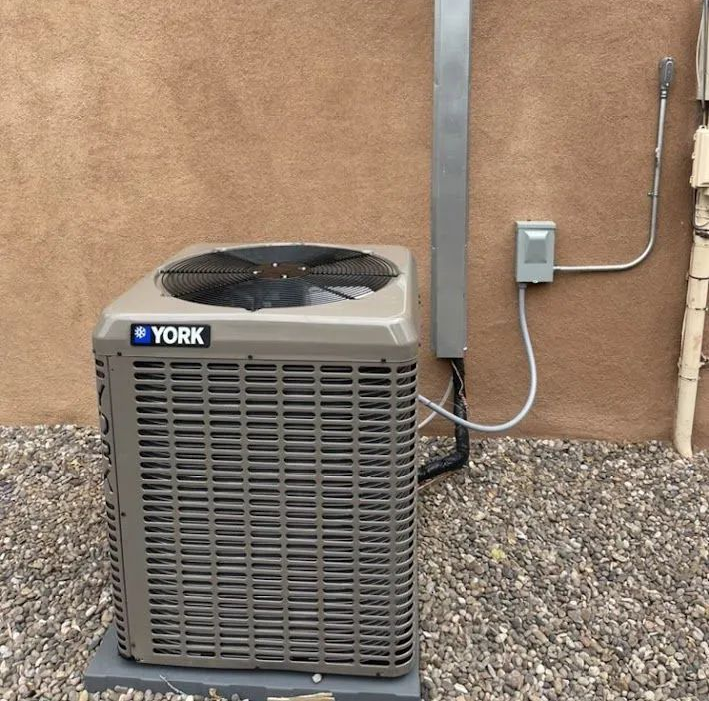
Walk outside and look at the condenser. Is it surrounded by tall weeds, stacked firewood, or a fence panel leaning against it? Is the coil covered in cottonwood fluff, leaves, or a gray mat of dust? In the high desert, wind carries fine dirt that settles on the coil fins and bakes into a film. A coil like that cannot shed heat, so pressures climb, efficiency drops, and the system runs for hours without making progress.
Shut the system off at the thermostat before you do anything near the unit. You can clear debris and give the coil a gentle rinse from the inside out with a garden hose on a soft setting. Do not use a pressure washer, and do not bend the fins. If the fan on top is not spinning while the system is calling for cooling, or the unit hums but nothing moves, stop there. That is a capacitor, motor, or contactor problem, and it needs a technician.
Warning: Always turn the system off at the thermostat and at the disconnect or breaker before cleaning or inspecting the outdoor unit. Never reach into the fan cage or touch electrical components. A capacitor can hold a charge even after power is removed.
A Frozen Indoor Coil Looks Like a Cooling Failure
Sometimes a system that seemed to cool fine all morning gradually loses ground. The indoor coil has frozen over. Ice builds up, blocks airflow, and the air from the vents turns weak and warm.
Look at the copper line running into the outdoor unit. If it is covered in frost or ice, or if you see ice on the indoor coil cabinet, switch the system to OFF and set the fan to ON so the blower can help melt the ice. Do not chip at it. Let it thaw completely, which can take a few hours, and expect water at the drain pan as it melts.
A coil freezes because of restricted airflow, which brings us back to the filter, vents, and blower, or because the refrigerant level is low. If it freezes again after you have replaced the filter and opened every vent, the cause is probably in the refrigerant circuit and needs a technician.
Low Refrigerant and Failing Components
Refrigerant is not used up like fuel. A system with the right charge keeps it for life. If the level is low, there is a leak somewhere, and topping it off without finding the leak only delays the same problem. Signs include ice on the lines, a hissing sound near the indoor coil or outdoor unit, and air that is cool but never cold even with a clean filter and clear coils.
Other failures can mimic this. A weak run capacitor can leave the compressor struggling. A failing blower motor can reduce airflow without stopping it. A compressor that is worn out may run but not pump effectively. These problems have similar symptoms, and a technician separates them by measuring the temperature drop across the coil, checking pressures, and testing the electrical parts. A homeowner cannot do that safely or accurately, and guessing can turn a repair into a replacement.
Sometimes the Equipment Is Fine and the House Has Changed
If the system checks out and the house still will not cool on the hottest afternoons, look at the conditions around it. A room addition, a finished garage, new west facing windows, or a patio cover that now shades the outdoor unit in a way that traps heat can all change what the system has to handle. Older homes in the North Valley and South Valley may have original ductwork and limited insulation that no longer matches the load.
Systems also age. A unit that was sized and set up well fifteen years ago may have lost capacity as coils foul, motors wear, and ducts leak. It still runs, but it no longer keeps up when the temperature outside climbs. A proper load calculation and a duct inspection tell you whether the answer is repair, duct work, or a different system.
What to Do, and What Not to Do
Do check the thermostat, filter, vents, and outdoor unit. Do give the system a few hours to recover after a fix, because a house that has soaked up heat all day will not drop ten degrees in twenty minutes. Do keep a spare filter on hand during dusty seasons.
Do not keep resetting the breaker if the system trips it. Do not add refrigerant from a retail kit or try to measure pressures yourself. Do not run a system with ice on the coil for hours hoping it clears up. And do not wait for a heat wave to call. The week the temperature peaks is when every cooling company is busiest.
Frequently Asked Questions
Why is my AC running constantly but the house stays warm?
A system that never cycles off is usually moving too little air, shedding too little heat, or fighting a heat load larger than its capacity. A dirty filter, caked coil, low refrigerant, or leaky ducts are common causes.
How much cooler should the air from the vents be than the room?
Most healthy systems deliver air around fifteen to twenty degrees cooler than the room across the coil. A much smaller difference means something is limiting the system, and a technician measures it to pinpoint the cause.
Can a dirty filter really keep the house from cooling?
Yes. A clogged filter reduces air crossing the indoor coil, which lowers cooling, can freeze the coil, and strains the blower. Check the filter monthly during cooling season and replace it when light no longer passes through.
Is it okay to hose off the outdoor unit myself?
Gentle rinsing is fine when the power is off. Use a garden hose on a soft setting and avoid bending the fins. Skip the pressure washer, and leave electrical parts and the fan motor to a technician.
My AC freezes up and then works again after it thaws. Is that normal?
No. Freezing signals a problem, usually low airflow or low refrigerant. Thawing clears the symptom but not the cause, so it returns. If it happens after a fresh filter and open vents, schedule a visit
When is it time to replace the system instead of repair it?
Consider replacement when the system is well into its second decade, repairs are frequent, it struggles even when clean and properly charged, or a major part like the compressor fails. A technician can help you decide.
Read the Air Before You Worry
An air conditioner that runs all day without cooling is rarely as broken as it feels. The pattern tells you where to look first. Warm air at the vents points to the outdoor unit or the refrigerant circuit, cool but weak air points to airflow, and cold air with a house that still climbs points to ducts or a heat load that has outgrown the system. Checking the thermostat, filter, vents, and outdoor coil settles most of it in minutes.
Where the air is only slightly cooler than the room, that is the moment to shut the system off and bring in someone with gauges and meters rather than guess. Enchanted Hills Mechanical
has spent 15
years diagnosing these exact afternoons for homeowners across Rio Rancho, NM, where high desert dust and long hours of sun push a tired system over the edge. A house that finally holds its temperature is rarely luck. It comes from reading what the system is telling you and acting before the next heat wave.